
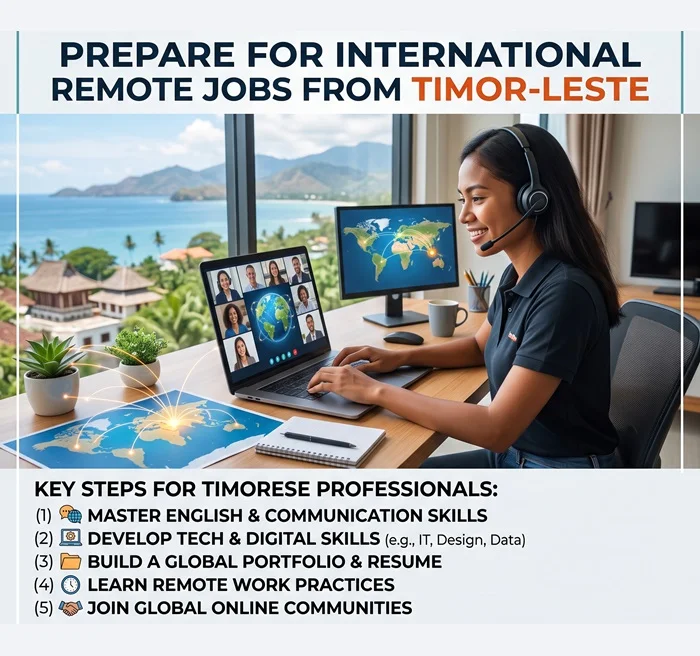
For people living in Timor-Leste, this creates exciting new possibilities. Instead of limiting your job search to local vacancies, you can now apply for international positions without leaving your home. Whether you are a student, recent graduate, experienced professional, or someone looking for a career change, remote work can provide access to higher salaries, valuable international experience, and long-term career growth.
However, working remotely for an international company requires preparation. Employers expect candidates to demonstrate professional communication, digital skills, reliability, and the ability to work independently.
This guide explains how to prepare for international remote jobs, the skills you need to develop, where to find opportunities, and how to stand out from other applicants.
What Is Remote Work?
Remote work means performing your job outside a traditional office. Instead of commuting every day, employees complete their tasks from home or another suitable location using the internet.
Remote jobs exist in many industries, including:
-
Customer Service
-
Information Technology
-
Software Development
-
Graphic Design
-
Accounting
-
Marketing
-
Translation
-
Data Entry
-
Project Management
-
Education
-
Sales
-
Technical Support
Many companies now hire fully remote teams, while others offer hybrid positions that combine office and remote work.
Why Consider International Remote Jobs?
Working for international employers offers several advantages beyond earning an income.
Benefits include:
-
Access to more job opportunities.
-
Competitive salaries.
-
Flexible working hours.
-
Professional career growth.
-
International work experience.
-
Opportunities to improve English.
-
Learning modern business practices.
-
Building a global professional network.
Many remote workers also enjoy a better work-life balance because they avoid daily commuting.
Skills International Employers Value
Technical knowledge is important, but employers also look for strong professional skills.
Some of the most valuable abilities include:
-
Written and spoken English.
-
Professional communication.
-
Time management.
-
Problem-solving.
-
Team collaboration.
-
Self-discipline.
-
Critical thinking.
-
Adaptability.
-
Customer service.
-
Digital literacy.
Employers want people who can work independently while maintaining high-quality results.
Improve Your English Communication
English is the primary working language for many international companies.
Even if your English is not perfect, improving it can significantly increase your chances of finding remote employment.
Practice by:
-
Reading English articles daily.
-
Watching educational videos.
-
Listening to podcasts.
-
Writing emails.
-
Speaking with language partners.
-
Using AI language-learning tools.
Confidence grows through regular practice.
Build Strong Digital Skills
Most remote jobs require employees to use digital tools every day.
Useful skills include:
-
Microsoft Word
-
Microsoft Excel
-
PowerPoint
-
Google Docs
-
Google Sheets
-
Google Meet
-
Zoom
-
Microsoft Teams
-
Email management
-
Cloud storage
Learning these tools makes daily work much easier.
Create a Professional CV
Your résumé is often the first impression an employer receives.
A strong CV should include:
-
Contact information.
-
Professional summary.
-
Education.
-
Work experience.
-
Technical skills.
-
Languages spoken.
-
Certifications.
-
References (if available).
Keep your résumé clear, honest, and easy to read.
Build an Online Portfolio
Many employers prefer seeing examples of your work.
A portfolio might include:
-
Graphic designs.
-
Writing samples.
-
Websites.
-
Programming projects.
-
Marketing campaigns.
-
Presentations.
-
Translation examples.
Even personal practice projects can demonstrate your abilities if you have limited work experience.
Create a Professional LinkedIn Profile
LinkedIn is one of the world's largest professional networking platforms.
A complete profile should include:
-
Professional photograph.
-
Career summary.
-
Skills.
-
Education.
-
Work experience.
-
Certifications.
-
Languages.
-
Portfolio links.
Recruiters frequently search LinkedIn when looking for remote candidates.
Where to Find International Remote Jobs
Several trusted websites specialize in remote employment opportunities.
Some of the most popular include:
LinkedIn Jobs
One of the largest professional job platforms in the world.
Website:
https://www.linkedin.com/jobs
Remote OK
Specializes in remote technology and digital jobs.
Website:
https://remoteok.com
We Work Remotely
Offers remote jobs in customer service, programming, design, and marketing.
Website:
https://weworkremotely.com
FlexJobs
Provides verified remote and flexible job opportunities.
Website:
https://www.flexjobs.com
Upwork
Ideal for freelancers offering professional services.
Website:
https://www.upwork.com
Fiverr
Allows freelancers to sell digital services to international clients.
Website:
https://www.fiverr.com
Freelancer
A marketplace for freelance projects across many industries.
Website:
https://www.freelancer.com
Toptal
Designed for experienced professionals in software development, finance, and design.
Website:
https://www.toptal.com
Prepare for Online Interviews
Most international companies conduct interviews through video calls.
Before your interview:
-
Test your internet connection.
-
Check your microphone and camera.
-
Choose a quiet location.
-
Dress professionally.
-
Keep your résumé nearby.
-
Research the company.
-
Practice common interview questions.
Good preparation demonstrates professionalism.
Manage Your Time Effectively
Remote workers often have greater independence.
Successful employees usually:
-
Create daily schedules.
-
Set priorities.
-
Meet deadlines.
-
Minimize distractions.
-
Take regular breaks.
-
Maintain organized workspaces.
Good time management builds trust with employers.
Learn About International Payments
If you work for companies based in other countries, you may receive payments through international financial services.
Common payment methods include:
-
Wise
-
Payoneer
-
PayPal (where available)
-
Direct international bank transfer
Before accepting a job, always confirm:
-
Payment schedule.
-
Currency.
-
Transaction fees.
-
Tax responsibilities.
-
Contract terms.
Understanding payment arrangements helps avoid misunderstandings.
Protect Yourself From Scams
Unfortunately, online job scams are common.
Be cautious if an employer:
-
Promises unrealistically high salaries.
-
Requests payment before hiring.
-
Refuses to provide a written contract.
-
Uses unprofessional communication.
-
Avoids video interviews.
-
Requests sensitive personal information too early.
Legitimate employers evaluate your skills—they do not ask candidates to pay recruitment fees.
Continue Learning
The remote job market changes quickly.
To stay competitive:
-
Take online courses.
-
Improve your English.
-
Learn AI tools.
-
Develop digital skills.
-
Follow industry news.
-
Practice your profession regularly.
Continuous learning increases your long-term career opportunities.