
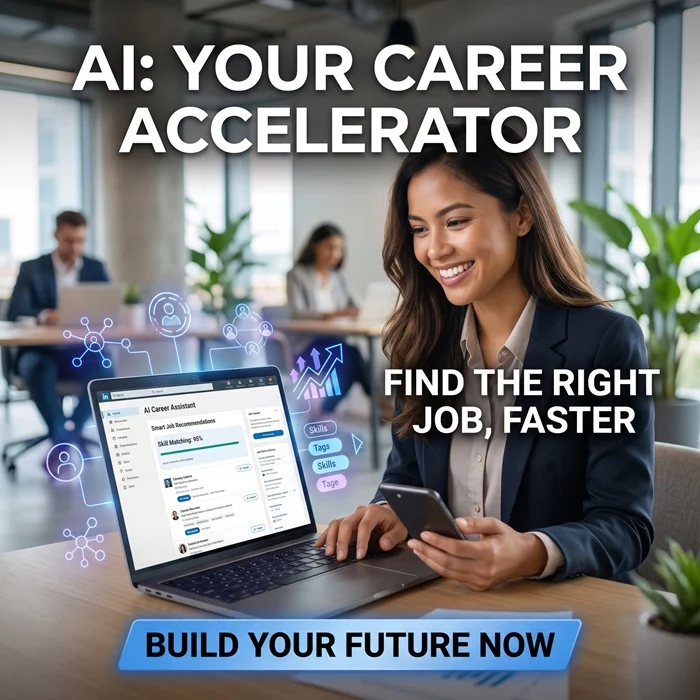
For people in Timor-Leste, AI represents a valuable opportunity to develop new skills, improve employability, and compete for both local and international jobs. Many AI tools are free or offer free versions, making them accessible even to beginners.
However, AI should not replace your own knowledge, creativity, or judgment. Instead, it should be used as a personal assistant that helps you work more efficiently while allowing you to make the final decisions.
This guide explains how Artificial Intelligence can support your job search, career development, and continuous learning.
Why Artificial Intelligence Matters
Employers around the world are increasingly adopting AI technologies to improve productivity, automate repetitive tasks, and make better decisions. As a result, many companies now value candidates who understand how to use AI responsibly.
Learning to work with AI does not mean becoming a programmer. Many modern AI tools are simple to use and require no technical background.
People who understand AI often complete tasks faster, communicate more effectively, and solve problems more efficiently.
1. Create a Professional Résumé
One of the most useful applications of AI is résumé writing.
Instead of spending hours formatting your CV, AI can help you:
Organize your work experience.
Improve grammar.
Suggest professional wording.
Highlight important skills.
Remove unnecessary information.
Make your résumé easier to read.
Remember to carefully review every suggestion before sending your résumé to employers. AI should help improve your document, not create false information.
2. Write Better Cover Letters
Many employers ask candidates to submit a cover letter explaining why they are interested in a position.
AI can help you:
Create personalized cover letters.
Improve writing style.
Correct grammar mistakes.
Organize ideas.
Adapt your letter to different job opportunities.
A personalized cover letter often creates a better first impression than using the same text for every application.
3. Prepare for Job Interviews
Interviews can be stressful, especially for first-time job seekers.
AI can simulate interview questions and help you practice your answers.
Examples include:
Tell me about yourself.
Why do you want this job?
What are your strengths?
What challenges have you overcome?
Why should we hire you?
Practicing regularly helps improve confidence and communication skills.
4. Learn English Faster
English is one of the most valuable skills in today's job market.
AI tools can assist with:
Vocabulary building.
Grammar correction.
Conversation practice.
Pronunciation improvement.
Writing emails.
Translating difficult expressions.
Daily practice, even for 20 or 30 minutes, can significantly improve your language skills over time.
5. Improve Your Writing Skills
Good writing is important in almost every profession.
AI can help you create:
Professional emails.
Reports.
Business proposals.
Social media content.
Articles.
Presentations.
Instead of copying AI-generated text directly, use it as inspiration and adapt it to your own voice.
6. Learn New Skills
AI can become your personal tutor.
It can explain complex topics such as:
Mathematics
Programming
Microsoft Excel
Digital Marketing
Accounting
Business Management
Graphic Design
Public Speaking
You can ask questions whenever you need clarification, making learning more interactive.
7. Organize Your Study Plan
Many people struggle because they do not know where to begin.
AI can help you create:
Weekly study schedules.
Learning goals.
Revision plans.
Daily practice activities.
Career development roadmaps.
Having a structured plan makes it easier to stay motivated.
8. Research Companies Before Interviews
Preparing for interviews requires understanding the employer.
AI can help summarize information about:
Company history.
Products and services.
Industry trends.
Company values.
Interview tips.
Being well-prepared demonstrates professionalism and genuine interest.
9. Develop New Business Ideas
Entrepreneurs can also benefit from AI.
It can assist with:
Brainstorming business ideas.
Market research.
Business planning.
Marketing strategies.
Customer communication.
Product descriptions.
AI should support your creativity rather than replace it.
10. Increase Productivity
Many professionals use AI every day to save time.
Examples include:
Organizing tasks.
Writing meeting notes.
Summarizing documents.
Creating checklists.
Generating ideas.
Planning projects.
Saving time on repetitive work allows you to focus on more important activities.
Free AI Tools Worth Exploring
Several trustworthy AI tools offer free plans or free access to basic features.
ChatGPT
Ideal for writing, brainstorming, studying, interview preparation, and improving communication.
Official website:
https://chatgpt.com
Google Gemini
Useful for research, writing, and answering questions.
Official website:
https://gemini.google.com
Microsoft Copilot
Works well with Microsoft Office and productivity tasks.
Official website:
https://copilot.microsoft.com
Claude
Excellent for summarizing documents and generating high-quality writing.
Official website:
https://claude.ai
Perplexity AI
Combines AI with web search to provide well-organized answers with sources.
Official website:
https://www.perplexity.ai
Canva AI
Useful for creating presentations, social media graphics, posters, and marketing materials.
Official website:
https://www.canva.com
AI Skills That Employers Value
Companies increasingly appreciate candidates who know how to use AI responsibly.
Useful AI-related skills include:
Writing effective prompts.
Editing AI-generated content.
Fact-checking information.
Creating presentations.
Automating repetitive tasks.
Summarizing documents.
Improving productivity.
These skills can make employees more efficient without replacing human creativity.
Important Tips for Using AI Responsibly
Artificial Intelligence is powerful, but it is not always correct.
Always:
Verify important information.
Check grammar and facts.
Never submit false information.
Respect copyright.
Protect personal data.
Use your own judgment.
Employers value honesty and authenticity.
Continue Learning
AI technology evolves quickly.
To stay competitive:
Read technology news.
Complete online courses.
Practice regularly.
Experiment with new tools.
Learn from experienced professionals.
Continuous learning is one of the best investments you can make.
Frequently Asked Questions (FAQ)
Is AI replacing human jobs?
AI is changing many jobs by automating repetitive tasks, but it is also creating new career opportunities. People who learn to use AI effectively are often better prepared for the future job market.
Do I need programming skills to use AI?
No. Most modern AI tools are designed for everyday users and require no programming knowledge.
Can AI write my résumé?
Yes, AI can help organize and improve your résumé. However, you should always review the content carefully and ensure all information is truthful and accurate.
Is it free to use AI?
Many AI platforms offer free versions with enough features for studying, writing, and career development. Some advanced features may require a subscription.
Which AI tool is best for beginners?
ChatGPT, Google Gemini, Microsoft Copilot, and Canva AI are excellent starting points because they are user-friendly and support a wide range of everyday tasks.
Final Thoughts
Artificial Intelligence is becoming an essential tool for education, job searching, and professional development. Rather than replacing people, AI helps individuals work smarter, learn faster, and become more productive.
For job seekers in Timor-Leste, AI offers exciting opportunities to improve résumés, prepare for interviews, strengthen English skills, learn new professions, and even start small businesses. The most successful professionals of the future will not necessarily be those who know the most, but those who know how to combine their knowledge with modern technology.
The key is to use AI responsibly. Continue developing your own skills, verify information carefully, and treat AI as a helpful assistant rather than a replacement for critical thinking. By embracing lifelong learning and making good use of these technologies, you can improve your career prospects and open the door to new opportunities—both in Timor-Leste and around the world.