

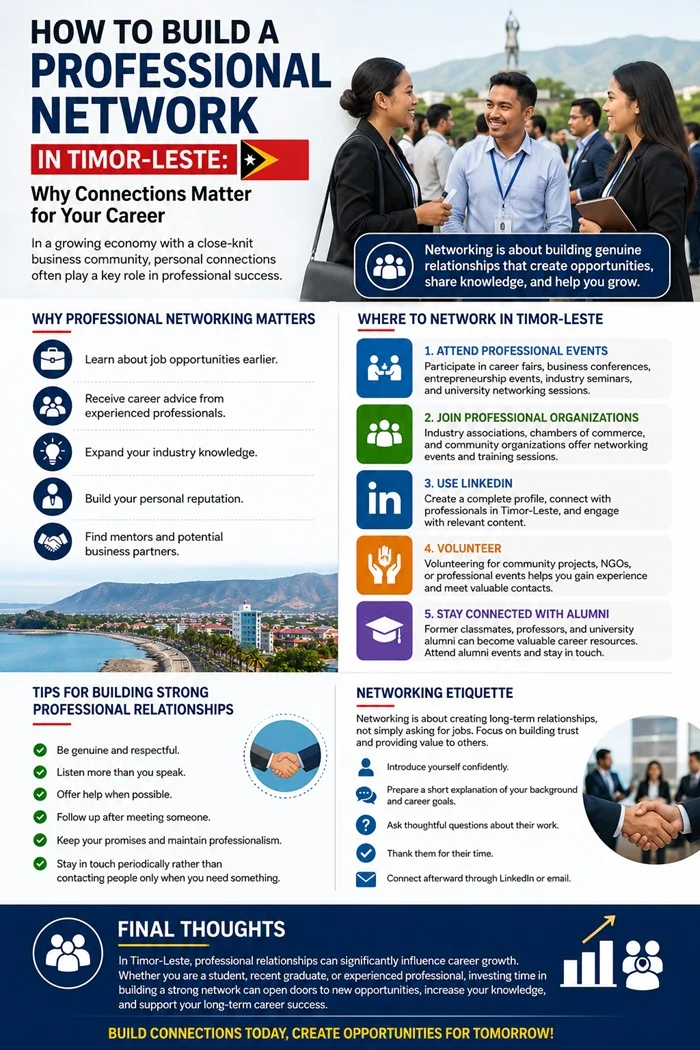
Networking means building and maintaining relationships with people who can share knowledge, advice, experiences, and professional opportunities. It does not mean asking everyone you meet for a job. Instead, it is about creating genuine professional relationships that can grow over time.
For young people in Timor-Leste, developing a professional network can be especially valuable. The country has a growing economy and many sectors are developing, including tourism, education, agriculture, construction, technology, telecommunications, finance, and international development. Knowing people who work in these areas can help young professionals better understand the job market and discover opportunities they may not find through traditional job searches.
What Is Professional Networking?
Professional networking is the process of meeting and connecting with people who have similar professional interests or who work in areas related to your career goals.
Your network can include:
* University professors and lecturers.
* Former classmates.
* Current and former colleagues.
* Employers and recruiters.
* Business owners.
* Government professionals.
* Non-governmental organization workers.
* International development professionals.
* Entrepreneurs.
* Trainers and teachers.
* Professionals working in your desired career field.
A professional connection does not have to be someone who can immediately offer you a job. A person in your network might introduce you to someone else, recommend a course, explain how their industry works, or tell you about an opportunity before it becomes widely advertised.
Start With the People You Already Know
Many young people think networking means attending large conferences or meeting important business leaders. However, your professional network can start with people you already know.
Think about your former classmates, university friends, teachers, relatives, internship supervisors, and people you have worked with in volunteer activities.
You can reconnect with them and ask about their professional experiences. For example, you might discover that a former classmate now works for an organization that interests you. Instead of immediately asking for a job, start a conversation and learn about their career journey.
A simple message such as, "Hello, I hope you are doing well. I saw that you are working in the tourism sector. I am interested in learning more about this area. How has your experience been?" can be a good way to start a professional conversation.
Attend Events and Training Activities
One of the best ways to expand your network is to participate in events related to your interests.
Look for:
* Career fairs.
* Training programs.
* Workshops.
* Seminars.
* Conferences.
* Business events.
* University activities.
* Volunteer programs.
* Professional associations.
* Entrepreneurship events.
You do not need to meet dozens of people at every event. Even one meaningful conversation can be valuable.
When you meet someone new, introduce yourself clearly. Explain your name, your area of study or work, and what type of career you are interested in.
For example:
"Hello, my name is João. I am studying business administration, and I am interested in developing a career in finance and banking."
A short introduction can make it easier for the other person to understand your interests and continue the conversation.
Use LinkedIn to Build Your Professional Presence
Social media is not only for entertainment. Platforms such as LinkedIn can help young people build professional connections locally and internationally.
Create a professional profile with:
* A clear profile photo.
* Your education.
* Your professional experience.
* Volunteer activities.
* Skills.
* Languages you speak.
* Training and certificates.
* Career interests.
After creating your profile, connect with professionals working in areas that interest you. Follow companies, organizations, universities, and professional groups.
However, avoid sending connection requests to everyone without explanation. When appropriate, write a short and polite message explaining why you would like to connect.
Your online presence should also be professional. Employers and organizations may look at public social media profiles when evaluating candidates. Before posting something publicly, consider whether the content represents the professional image you want to build.
Find a Mentor
A mentor is someone with more experience who can provide advice and guidance based on their own professional journey.
For young people starting their careers, having a mentor can be extremely valuable. A mentor can help you understand your strengths, identify skills you need to improve, and make better decisions about your career.
Your mentor could be a teacher, university lecturer, manager, experienced professional, entrepreneur, or someone working in an organization you admire.
You do not need to formally ask someone to become your mentor immediately. Start by asking for advice or information. If the relationship develops naturally, you may eventually have a long-term professional mentorship.
Give Before You Ask
One of the most important rules of networking is to avoid making every conversation about what you want.
Good networking is based on mutual respect and value.
If someone helps you, thank them. If you find an opportunity that may be useful to someone in your network, share it. If you have useful information, offer it.
For example, if you know that a company is looking for candidates and someone in your network has the right qualifications, you can tell them about the opportunity.
When you help others, people are more likely to remember you positively.
Stay in Contact
Meeting someone once is not enough to build a strong professional relationship. Networking requires consistency.
After attending an event, you can send a short message thanking the person for the conversation. From time to time, you can also share useful information or congratulate them on professional achievements.
However, avoid sending frequent messages without a clear reason. Professional relationships should develop naturally.
Networking Can Help You Discover Hidden Opportunities
Not every job opportunity is widely advertised. Some positions are filled through professional recommendations, referrals, or personal connections.
This does not mean that networking guarantees employment. Qualifications and skills remain important. However, having a strong professional network can help you learn about opportunities earlier and understand what employers are looking for.
For example, someone in your network might tell you about an upcoming internship, training program, scholarship, volunteer position, or job opening.
The information you receive through your network can also help you prepare before applying.
Start Building Your Network Today
You do not need to wait until you graduate from university to start networking. The best time to build professional relationships is while you are still studying or developing your skills.
Start with five simple actions:
1. Reconnect with three former classmates.
2. Create or improve your LinkedIn profile.
3. Attend one professional event or training activity.
4. Contact someone working in a career that interests you.
5. Offer help or share a useful opportunity with someone else.
Remember that networking is a long-term process. The goal is not to collect hundreds of contacts. The goal is to build genuine relationships with people who share professional interests, values, and goals.
For young people in Timor-Leste, developing a strong professional network can open doors to new knowledge, mentorship, internships, training programs, partnerships, and employment opportunities.
Your next career opportunity may come from a job advertisement—but it may also come from a conversation you had months or even years earlier. That is why building professional relationships today can be one of the smartest investments you make in your future.